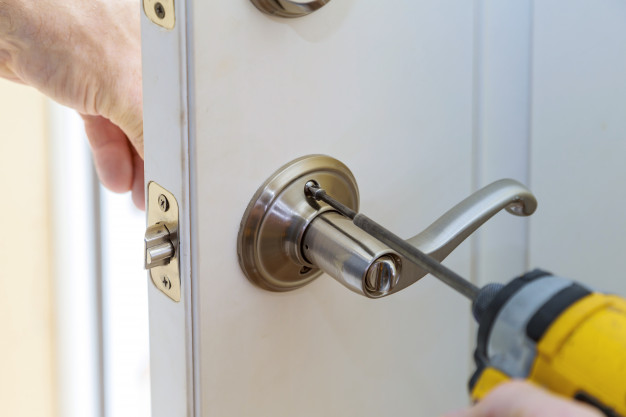
Locked Out of Your Apartment in Dubai? Here’s What to Do
Getting locked out of your apartment in Dubai can be surprisingly easy, and incredibly stressful. Whether you stepped out for just a minute to take the trash or forgot your keys during a rushed morning commute, it happens more often than you’d think. With the growing use of auto-lock doors and digital locks in Dubai’s apartments, this is a situation thousands of people face every year.
Why Does This Happen So Often in Dubai?
Dubai’s modern apartments, especially in high-rise towers, often come equipped with:
- Auto-locking doors that shut the moment they’re closed
- Smart locks that rely on mobile apps, fingerprint readers, or digital keypads
- Security doors that can’t be opened from the outside without a key—even if it’s just slightly ajar
This means:
- Leaving without your key can immediately lock you out
- Dead batteries in digital locks or app failures can prevent entry
- Manual locks may jam due to dust or wear in older buildings
Step-by-Step: What to Do If You’re Locked Out
1. Stay Calm and Don’t Force the Door
Panicking or trying to force the door open can damage the lock or the frame. If you live in a rented apartment, this could also affect your deposit. Take a deep breath and assess your options.
2. Check for a Spare Key
Think about:
- Did you leave a spare with a trusted friend or neighbor?
- Does building security have a copy (in some cases, they do for emergencies)?
- Do you have another way in (like a sliding balcony door, if you’re on a low floor)?
3. Contact Your Building Management
Most residential towers and communities in Dubai have:
- Security guards or reception desks available 24/7
- Emergency access protocols for locked-out tenants
Provide proof of identity or address if needed—they may be able to assist, or advise on next steps.
4. Check If You Have Digital Access Backup
If you use a smart lock:
- Try using the app-based unlock from another device (e.g. your tablet or a family member’s phone)
- Try restarting your phone and checking the app’s Bluetooth or Wi-Fi connection
- If the battery in the smart lock is dead, see if there is a manual keyhole override (some brands like Yale, Samsung, and Philips include this)
5. Avoid Common Mistakes
- Don’t try to slide credit cards or metal objects into the door—this can damage both the lock and the card
- Don’t pour oil or water into the lock if it seems stuck
- Don’t allow unverified strangers to “help” force the lock
Prevention Tips: How to Avoid Lockouts in the Future
Here are smart habits Dubai residents can build into their routine:
- Keep a spare key in your office desk, glove compartment, or with a nearby friend
- Use a smart key cabinet or hide-a-key box in a secure, discreet outdoor location (not near the door)
- Install a smart lock with multiple unlock methods: code, fingerprint, mobile app, and mechanical key
- Hang a small tag on your doorknob inside as a “KEYS?” reminder when leaving
- Always charge your smart lock battery on schedule (most give low-battery warnings)
2. Lost Your Keys in a Mall, Taxi, or Gym? Steps to Stay Safe

It can happen to anyone
In a fast-paced city like Dubai, misplacing keys is surprisingly common. Whether you were juggling shopping bags at Dubai Mall, rushing out of a Careem, or wrapping up a workout in Business Bay, one small distraction can lead to a big headache.
The problem isn’t just losing the key, it’s not knowing where it ended up. Did it fall between seats? Was it picked up by someone else? Could it be linked to your ID or address?
This section will guide you on what to do immediately and how to reduce the risks.
Stay Calm and Act Quickly
The most important thing to remember is: act early. The longer your key is missing, the more exposure there is to potential misuse.
Step-by-Step Guide: What to Do if You Lost Your Keys in Dubai
1. Retrace Your Movements
Think about everywhere you’ve been in the last hour:
- Check pockets, bags, lockers, and car seats.
- Call the gym, store, or taxi company to check their lost & found.
- For taxis, note the license plate or use the ride-hailing app to report the loss.
Most malls and public spaces in Dubai have centralized lost property offices — ask security for help.
2. Check if Your Keys Were with Other Identifying Items
If your lost key was on a ring with:
- Your Emirates ID
- A building access card
- A tag with your address or car plate number
…then there’s a greater security risk. Even if you recover the key, you may want to replace the lock to be safe.
3. Notify Your Building Management
Inform your building security or front desk as soon as possible. They can:
- Deactivate lost access cards or fobs
- Log the incident
- In some cases, issue a temporary access solution
4. Consider Lock Replacement or Rekeying
Even if the key doesn’t have your address, someone who finds it could still follow you home or wait for an opportunity. If you’re unsure whether it’s safe, it’s always better to replace the lock than to take a chance.
5. Check If You Have Key Insurance or Coverage
Some home contents insurance in Dubai covers lost keys and emergency locksmith costs. You’ll need:
- Police report (in some cases)
- Official invoice from a licensed locksmith
Check your policy or talk to your agent.
Should You File a Police Report?
It depends. If the key loss is tied to:
- A break-in
- A missing bag with identity cards
- A suspicious incident
Then it’s best to file a report at your local Dubai Police station or via the Dubai Police Smart App. This gives you a record if anything happens later.
How to Prevent It From Happening Again
Let’s face it: keys are small, and pockets are unpredictable.
Here are simple ways to avoid future panic:
- Use a Bluetooth key tracker (e.g. Tile, Apple AirTag)
- Label your key with your phone number (not your address)
- Keep keys in a consistent place — a specific bag pocket or key pouch
- Digitize access: Many smart locks allow app entry or keypad codes, so you’re never truly locked out
Key Takeaway
Losing a key in Dubai is frustrating, but quick action can reduce both the stress and the risk. Stay alert, know your building’s protocol, and take steps to strengthen your access security, especially if your keys are ever out of your sight.
3. When Smart Locks Fail: What to Do if Your Digital Lock Stops Working
Tech can fail — even smart locks
Smart locks have become incredibly popular across Dubai, especially in newer apartments, short-term rentals, and villas in areas like JVC, Dubai Hills, Marina, and Palm Jumeirah. Brands like Yale, Philips, Samsung, and Aqara are everywhere.
But even the smartest lock is still a machine and machines can glitch, freeze, or completely stop responding. Whether your fingerprint isn’t working or your lock app won’t connect, smart lock failure can catch you off guard.
This section will walk you through common causes, safe fixes, and when to escalate the issue.
Common Reasons Why Smart Locks Fail
Understanding the reason helps you respond calmly. The most common causes in Dubai include:
- Battery Died Completely
- Extreme summer heat + battery drain = a dead smart lock.
- Many models give low-battery warnings, but they’re easy to miss.
- Wi-Fi or Bluetooth Failure
- Your app can’t connect to the lock if the internet is down or the connection is unstable.
- This is common during internet upgrades or Etisalat/Du outtages.
- Fingerprint or PIN Not Recognized
- Sweat, oil, or dust can cause fingerprint failure.
- PIN errors may be due to lock memory glitches or worn-out keypads.
- Software Glitch or Lock Freezing
- Locks may suddenly stop responding to app commands.
- Some locks even update firmware automatically and hang mid-process.
- Incorrect Configuration or User Limit Reached
- Too many users added to the system? Some locks auto-disable input.
- Admin resets may be required.
Step-by-Step Guide: What to Do When Your Smart Lock Stops Working
1. Try the Backup Method
Most smart locks sold in Dubai come with a manual key override. Keep this backup key somewhere safe — not inside the apartment.
If your lock has:
- A hidden keyhole under the handle or cover — use the mechanical key.
- An external 9V battery connector — press a 9V battery on it to “jump-start” the lock.
2. Restart or Reboot the Lock (If Accessible)
If you’re inside and the lock isn’t responding to the app:
- Turn the lock off (if it has a switch)
- Remove the battery, wait 10 seconds, reinsert it
- Check the manufacturer manual for reset steps
Note: Do not perform a factory reset unless you know what you’re doing. It may erase all users and access codes.
3. Check the Battery Level
If it’s been more than 6 months since last replaced, it’s likely the battery:
- Open the battery case (usually at the top or rear of the lock)
- Use recommended batteries only (e.g., Alkaline AA)
- Avoid using rechargeable or mixed brands
4. Use the App Troubleshooting Tools
Some smart lock apps like Yale Access or Philips EasyKey have:
- Battery indicators
- Reset instructions
- Remote unlock options (if connected via Wi-Fi bridge)
Try:
- Force closing the app and reopening it
- Reconnecting via Bluetooth or Wi-Fi
- Logging out and back into the app
What NOT to Do
- Don’t remove screws or panels unless you’re trained — this can void the warranty.
- Don’t force the lock open with tools — you’ll damage the motor and frame.
- Don’t keep pressing buttons rapidly — it may trigger lockout mode.
Preventing Smart Lock Failures in Future
Smart locks need care just like any other home tech. Use these tips:
- Change the batteries every 6 months — don’t wait for low-battery alerts.
- Keep fingerprints dry and clean before touching the sensor.
- Test app access regularly so you’re not caught off guard.
- Have at least one manual key stored securely outside your home.
- If the lock uses Wi-Fi, keep your router nearby and powered on.
Key Takeaway
Smart locks offer convenience, but they still rely on power, apps, and sensors, all of which can fail. Being prepared with backup options, understanding how to troubleshoot, and knowing when to ask for professional help makes all the difference.
4. Broken Key Inside the Lock? How to Handle It Without Damage
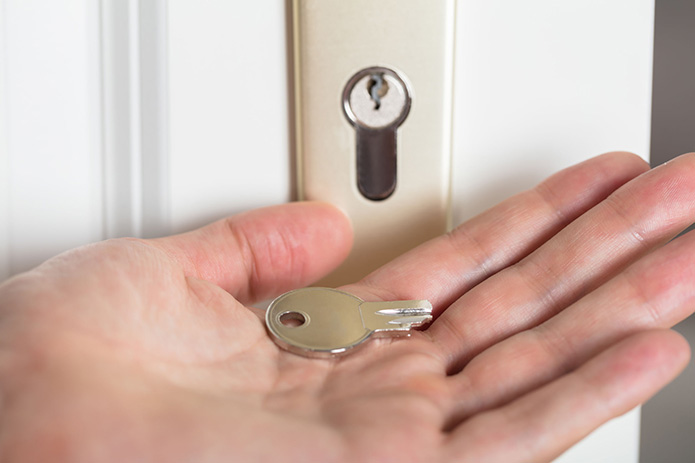
It happens fast — and often without warning
You insert your key, turn it, and suddenly, snap. Half the key is in your hand, and the other half is stuck inside the lock. Whether it’s your flat door in International City, your office in Business Bay, or a storeroom in your villa, it’s a frustrating problem.
In Dubai’s climate, keys and locks endure heat, dust, and wear. This section will explain why keys break, how to handle the situation calmly, and what not to do to avoid costly damage.
Why Do Keys Break in the First Place?
- Worn or Weakened Keys
- Repeated use, especially with duplicate keys, weakens the metal over time.
- Misaligned or Dirty Locks
- Sand and dust can cause resistance inside the lock, forcing you to turn harder.
- Rust or Internal Corrosion
- Humidity and sea air (common in areas like JBR or Palm Jumeirah) can corrode lock mechanisms.
- Using the Wrong Key
- It’s surprisingly easy to insert a similar-looking key — especially with older keychains.
Step-by-Step Guide: What to Do if Your Key Breaks in the Lock
1. Don’t Try to Force the Remaining Key In
Never try to push the broken piece deeper with the remaining part. This makes extraction harder and may permanently damage the lock cylinder.
2. If Part of the Key is Visible, Try Gently Pulling It Out
You can attempt to:
- Use tweezers or needle-nose pliers to grip the exposed edge.
- Try spraying lubricant (like WD-40) around the key for smoother extraction.
Move slowly and avoid twisting. Pull the key straight out to avoid breaking internal lock pins.
3. Try the “Jigsaw Blade Method” (For DIY-Savvy Users)
- Use a fine metal jigsaw blade (or a strong needle) to insert beside the broken key.
- Catch the teeth of the blade on the key’s grooves and gently slide it out.
This method works best if the key isn’t fully inserted. If it’s flush or deep inside, stop and move to the next step.
4. Stop If It Doesn’t Come Out Easily
If your attempts fail, stop. Forcing tools or poking inside the lock may:
- Bend the key
- Damage internal pins
- Make the entire lock unusable
At this stage, non-destructive extraction tools used by professionals are the safest option.
When to Consider Replacing the Lock
In some cases, especially with older locks:
- Internal damage may already be present.
- Extraction might leave the lock unreliable.
- The broken key may be too deep to remove safely.
In such cases, replacing the cylinder or the full lock may be faster and more secure than repeated extraction attempts.
Prevention Tips
You can avoid key breakage with a few simple habits:
- Avoid using copied keys made of thin or soft metal.
- Lubricate your locks every 4–6 months with silicone or graphite spray.
- Replace worn-out locks or keys before they become a problem.
- If a key starts to feel stiff when turning, don’t force it — get it checked.
Key Takeaway
A broken key in the lock is inconvenient, but with the right response, it doesn’t have to turn into a major repair. Avoid forcing tools, know when to stop, and make small changes to prevent future breakage.
5. Forgot Your Digital Door Lock Code? Here’s How to Reset It Safely
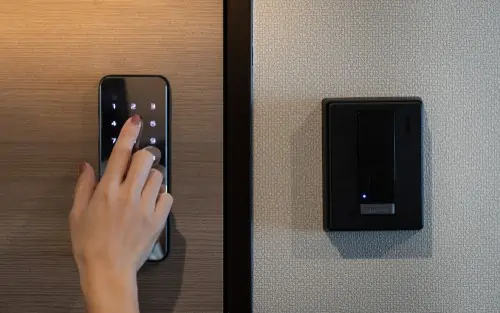
It’s more common than you think
With so many passwords, apps, and PINs in our daily lives, it’s easy to forget a smart lock code — especially if you haven’t used it in a while. Whether you’re using a Yale, Philips, Samsung, or other digital lock in Dubai, this situation can be frustrating and even a bit risky if you keep trying incorrect codes.
But there’s a safe, structured way to recover or reset your code — without compromising the lock or security system.
First, Understand How Your Lock Stores Codes
Different brands work differently. In Dubai, most popular models store access codes in one of the following ways:
- Master Code + User Codes
Most locks have an admin/master code used to add or remove user codes.
– If you forget the user code but remember the master code, you can usually reset the user entry easily. - App-Controlled Access (Wi-Fi or Bluetooth)
– Locks like Yale Linus, Philips EasyKey, or Aqara allow you to manage access through a mobile app.
– Codes can often be reset directly from the app if you still have access. - Standalone Keypad Locks (No App)
– Some locks operate only with keypad entries.
– If you forget both the master and user codes, you may need to factory reset the device.
Step-by-Step: What to Do If You Forgot the Code
1. Try Backup Access First
Before attempting a reset:
- Check if you have a mechanical key override (usually hidden beneath a panel or inside the handle).
- If you’ve set up Bluetooth or mobile app access, use it to unlock the door first.
This gives you access to the inside and the ability to manage settings from within.
2. Access the Lock’s User Manual
Find the manual that came with your smart lock — most include specific instructions for:
- Adding or removing user codes
- Performing a soft or factory reset
- Accessing the lock’s admin menu
📱 Tip: If you don’t have a paper copy, look up your lock model online and download the PDF version. Search “[Brand] [Model] user manual PDF.”
3. Use the Master Code (If Known)
Most locks allow you to reset or delete forgotten codes if you know the master/admin code. This avoids the need for a factory reset.
Steps vary slightly, but usually follow this pattern:
- Enter master code > press [*] or [#]
- Navigate to “Delete User” or “Change User Code”
- Enter the number of the user code you forgot and assign a new one
If you try the wrong master code too many times, some locks enter lockout mode — requiring a wait period or manual reset.
4. Factory Reset (Only If Necessary)
If you’ve lost both the user and master code, a factory reset may be the only option. This will:
- Erase all stored codes
- Reset all settings to default
- Require you to set a new master code
Factory reset usually requires access to:
- A reset button on the internal panel (inside your apartment)
- Power cycling or removing the batteries
- Holding the reset button for a set number of seconds (usually 5–15)
After reset, refer to the manual to reprogram the lock from scratch.
Safety Tips When Resetting a Smart Lock
- Don’t attempt a factory reset from the outside — most locks are designed to prevent this for security reasons.
- Avoid repeatedly pressing codes — it may trigger lockout mode.
- Keep a written copy of your admin code stored in a safe place (not your phone).
- Regularly test access options to ensure you’re not locked out when you need them.
Good Habits for Code-Based Smart Locks
- Use codes that are easy for you to remember but not obvious (avoid birthdays, flat numbers, or “1234”).
- Change codes every few months, especially if you’ve shared them with visitors or staff.
- Always enable multiple access modes (code + fingerprint or app) so you have backups.
Key Takeaway
Forgetting a smart lock code in Dubai isn’t a crisis — unless you try to fix it blindly. Knowing how your lock stores data, having backup access ready, and following brand-specific reset steps will help you restore access safely and avoid permanent lock damage.
6. Can You Change Locks in a Rented Apartment in Dubai?
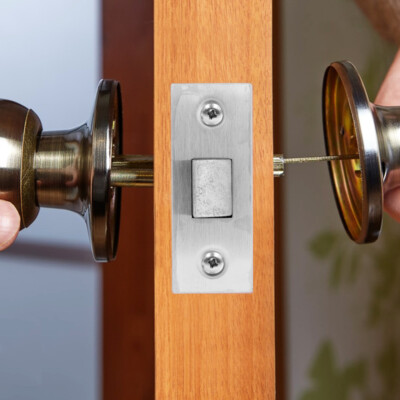
A common concern for tenants
Whether you’ve just moved into a new flat in JVC, Downtown, or International City, or you’re simply worried about who else might have a copy of your key — changing the lock in a rented apartment is something many tenants in Dubai want to do. But what does the law say? Can you actually change the lock?
Let’s break it down clearly so tenants don’t get stuck between safety concerns and tenancy rules.
Your Right to Feel Safe — But Within Reason
Dubai tenants do have the right to feel secure in their home. If you’re unsure who previously had access (ex-tenants, agents, maintenance workers), updating your locks may feel like a basic need — and in most cases, it’s valid.
However, there are a few important conditions you should be aware of.
What the Law and Tenancy Agreement Say
- You Must Not Damage the Property
– Dubai’s tenancy law (under RERA) requires tenants to maintain the property and return it in the same condition at the end of the lease. - Lock Changes Should Be Reversible
– If you change the lock, it should be removable or restorable without damaging the door or frame. - Some Contracts Require Landlord Permission
– Many tenancy agreements in Dubai include clauses like:
“The tenant shall not alter locks or access systems without written approval from the landlord.”
Safe Steps to Follow If You Want to Change the Lock
1. Read Your Tenancy Agreement
Before you do anything, check your contract:
- Does it prohibit lock changes?
- Does it require permission in writing?
2. Request Permission in Writing (If Required)
If the contract mentions anything about altering fixtures:
- Send a polite email or WhatsApp message to your landlord or real estate agent.
- Clearly explain your concern and mention that you will cover the cost of replacement and restore it at move-out if required.
Most landlords will not object, especially if they know it’s for security reasons and won’t cost them anything.
3. Keep the Old Lock (Just in Case)
When replacing the lock or cylinder:
- Keep the original in a labelled box or bag.
- Reinstall it before your final inspection at the end of your lease to avoid deductions from your deposit.
4. Use a Professional to Avoid Damage
Improper installation can damage the door, especially in metal or reinforced frames. Always choose:
- A professional locksmith who understands Dubai building codes
- Someone who can replace the lock non-destructively
Alternatives If You Can’t Change the Lock
If your landlord says no, or if you live in a smart lock building, you still have options:
- Add a secondary lock (like a latch or bolt) from inside the apartment.
- Use portable smart locks (e.g. ones that go over the existing deadbolt).
- Change just the cylinder — this avoids replacing the entire lock and can be reverted easily.
Key Takeaway
In most cases, yes, you can change the lock in a rented apartment in Dubai, as long as you follow the right steps. Always check your tenancy agreement, inform your landlord, and make sure the change is safe and reversible. Your security matters, but so does staying in line with your contract.
7. Duplicate Keys in Dubai – What Every Tenant and Landlord Should Know
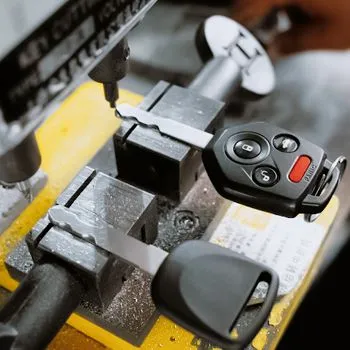
Who really has a copy of your key?
When you move into a flat or villa in Dubai, one of the first concerns many people have is:
“Who else has access to my home?”
It’s a valid worry — especially in rental properties where:
- Past tenants may have kept a copy.
- Maintenance teams, agents, or even building security could have duplicates.
- You’re not sure if the lock has ever been changed.
Let’s explore the reality of key duplication in Dubai, how it happens, who can legally copy keys, and what every resident should be aware of.
Can Anyone Make a Duplicate Key in Dubai?
Technically, yes — most traditional mechanical keys can be duplicated easily at key-cutting kiosks or hardware stores across Dubai.
You’ll find them in:
- Dragon Mart
- Karama
- Satwa
- Inside some supermarkets and malls
The duplication process takes just 1–2 minutes and costs between AED 10–50 depending on the key type.
The problem? There’s no requirement to prove ownership — which means anyone with physical access to your key (even briefly) can get a copy made.
What About Restricted or High-Security Keys?
Some buildings — especially in areas like Dubai Marina, JLT, or DIFC, use restricted or patented key systems. These keys often have:
- Engraved serial numbers
- A “Do Not Duplicate” warning
- Unique grooves or magnetic chips
These can only be duplicated by authorized locksmiths and often require:
- Owner or tenant ID
- Permission letters from the building or landlord
While safer, these systems are still only as secure as the people who manage them.
Questions Every Tenant Should Ask
Before or after moving in, ask your agent or landlord:
- Has the lock or cylinder been changed since the last tenant left?
– If not, consider replacing or rekeying it. - How many copies of the key exist?
– Request all spares (ideally, this should be documented in your tenancy handover). - Is this a master key system (one key opens multiple flats)?
– Some buildings still use outdated master key systems — ask the building security to clarify.
How to Tell if Someone Has Made a Duplicate of Your Key
While it’s hard to detect, signs that someone may have access to a duplicate key include:
- Unexplained signs of entry (doors slightly ajar, things moved)
- Missing items — even small ones
- No visible damage to the door or lock, suggesting no break-in
If you suspect unauthorized access:
- Inform building security
- Consider replacing or upgrading the lock immediately
How to Prevent Unauthorized Duplication
Here’s how to protect yourself:
- Use keys with restricted duplication rights
Ask for high-security locks that require code cards or approval to copy. - Store spare keys in a trusted place
Avoid hiding them outside your flat (e.g. under mats or flowerpots). - Avoid handing keys to unknown third parties
Cleaners, movers, or short-term guests should be supervised or given timed access. - Switch to smart locks
Many digital locks allow you to:- Create and revoke PIN codes
- Track entry logs
- Avoid physical keys altogether
Key Takeaway
Duplicate keys are easy to make in Dubai, sometimes too easy. If you’re a tenant or even a property owner, be proactive: ask the right questions, control who gets access, and use modern solutions if your lifestyle demands it.
8. Locked Out of Your Flat? What You Should (and Shouldn’t) Do in Dubai
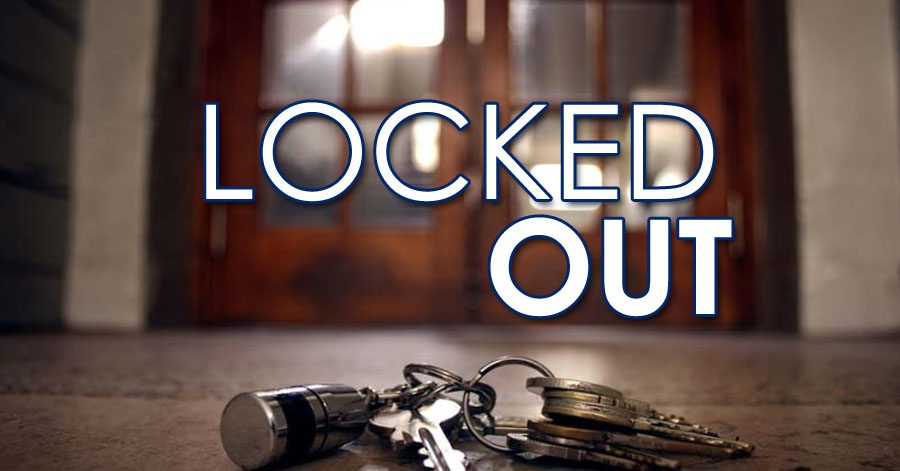
It happens to everyone — sooner or later
You’re rushing out for a delivery, a phone call, or even to throw out the trash — and before you know it, the door slams shut behind you.
No keys. No phone. No way in.
Lockouts are one of the most common day-to-day emergencies for residents across Dubai — whether you live in a high-rise in Marina, a townhouse in JVC, or a studio in International City. The good news is: there’s a right way to handle it (and a wrong way, too).
Why Lockouts Happen in Dubai Apartments
- Auto-lock doors: Many apartments have doors that lock automatically when closed.
- Left keys inside: Happens during short trips outside the flat — taking out garbage, getting laundry, etc.
- Lost keys: Common during commute, night-outs, or beach visits.
- Malfunctioning digital locks: Dead batteries, software glitches, or disabled access codes.
- Children accidentally locking the door from inside
What to Do If You’re Locked Out (Safely)
1. Stay Calm and Assess the Situation
Ask yourself:
- Do you have access to another entrance (e.g. balcony from a neighbor’s unit)?
- Does someone in your household have a spare key?
- Do you have your mobile or wallet?
If you’re in a shared building, head to the reception or security desk for assistance.
2. Check If Building Management or Security Can Help
Some buildings in Dubai — especially in developed areas like Downtown, JLT, and Al Barsha — have spare access keys for emergencies.
However:
- They will only help registered tenants or owners.
- ID verification is usually required.
- They may not assist outside office hours, or if it involves smart locks or deadbolts.
3. Contact a Trusted Friend or Roommate (If Possible)
If you live with someone or gave a key to a trusted friend, now’s the time to call them. It may save you time, stress, and money.
Tip: If you’ve hidden a key (with permission) or use a smart key box, you may still have a way back in.
4. If You Have a Smart Lock: Try App or Remote Unlock
For locks with Wi-Fi or Bluetooth functionality:
- Open the companion app (Yale, Philips, Samsung Smart Door, etc.)
- Attempt remote unlock (if previously connected)
- Use fingerprint or card access if PIN fails
If the battery is dead, you may need to use a 9V battery externally to power it temporarily.
What Not to Do During a Lockout
- Don’t try to force the door open — this could damage the lock or the frame, resulting in costly repairs.
- Don’t attempt DIY unlock methods (like credit cards, knives, or screwdrivers) — especially on metal or digital locks.
- Don’t call just any “key guy” from social media — there are many unlicensed operators in Dubai who may damage the lock or overcharge you.
- Don’t climb balconies or windows — this is illegal, extremely risky, and could land you in serious trouble with building management or authorities.
How to Avoid Getting Locked Out Again
- Keep a spare key with someone you trust (family, friend, or neighbor).
- Install a smart lock with fingerprint or mobile access.
- Use a key holder near the door inside so you’re less likely to forget.
- Place a reminder tag on your doorknob if you’re prone to forgetting keys.
- Schedule battery checks for smart locks every 4–6 months.
Key Takeaway
Lockouts are common, but they don’t have to be disasters. Stay calm, avoid risky behavior, and use your building’s resources when possible. A bit of planning — like a spare key or digital access — can save you hours of frustration in the future.
9. Is It Legal to Install a Smart Lock in Your Dubai Apartment?
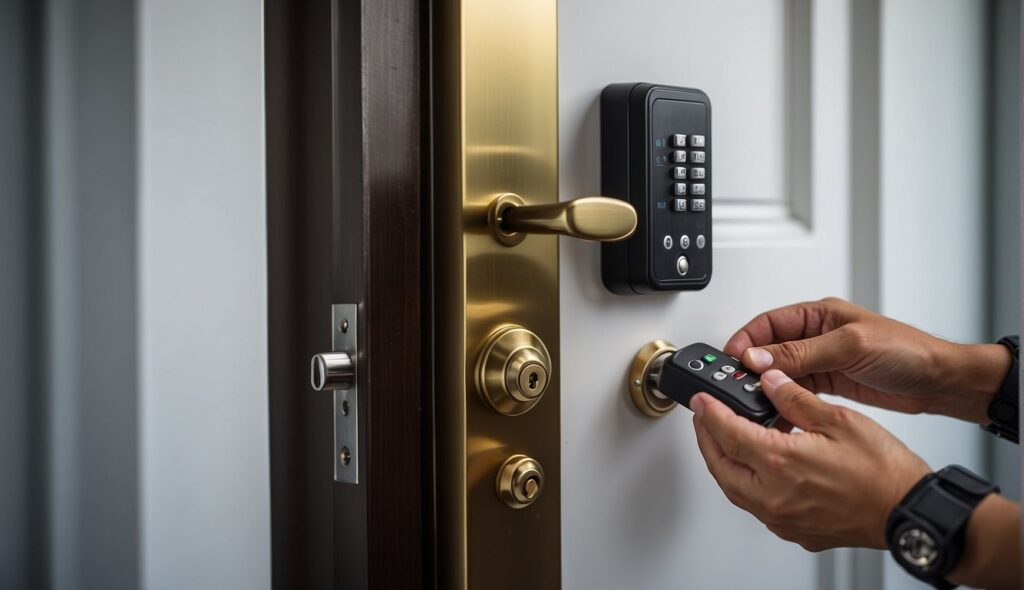
Digital convenience meets legal gray zones
With the rise of smart homes in Dubai, many residents want to upgrade their traditional door locks to smart locks — for features like remote access, fingerprint unlock, and tracking who enters and exits.
But here’s the big question:
Are you allowed to install a smart lock if you’re renting an apartment or villa in Dubai?
Let’s break down what you need to know.
Smart Locks Are Not Illegal — But There Are Rules
In short, yes, smart locks are legal in Dubai, but their installation depends on your tenancy status, building rules, and how the lock is fitted.
Here’s how the situation looks based on your living arrangement:
If You Are a Tenant (Renter)
Most tenancy contracts in Dubai include a clause like:
“The tenant shall not make alterations to the property without the landlord’s written consent.”
This includes:
- Changing mechanical locks
- Installing electronic or digital access systems
- Drilling into the door frame or wiring into the power supply
What You Can Do (As a Tenant):
- Request written permission from your landlord.
- Explain the benefits: increased security, no duplicate key risks, remote access, etc.
- Offer to cover the cost and revert the lock to the original before moving out.
- Choose non-destructive installations.
- Many smart locks (e.g., Yale, Philips, Aqara) are designed to fit over existing deadbolts or latch locks — no drilling required.
- Keep the original lock stored safely.
- In case you need to restore it at the end of your lease.
Important: If you install a smart lock without approval and the landlord objects, you could face deposit deductions or even eviction warnings.
If You Are a Property Owner
As an owner, you are free to upgrade your locks. However:
- You should still inform your building management, especially if the main entrance is tied to building-wide security (like intercom or access control systems).
- For freehold properties, you can generally proceed freely — provided the lock doesn’t violate building codes or fire safety laws.
Things to Consider Before Installing a Smart Lock in Dubai
Power Supply Compatibility
- Battery-powered locks are ideal — no need for wiring.
- Always keep spare batteries nearby.
Internet Access or App Setup
- Some locks require Wi-Fi or Bluetooth pairing to function properly.
- Ensure stable connectivity at your front door.
Compliance with Building Safety Standards
- The lock should not block emergency access or violate fire escape protocols.
Support for Backup Access
Make sure your lock has alternatives like:
- Key override
- Card entry
- Manual code entry
- External 9V emergency power port
Popular Smart Lock Brands Used in Dubai Apartments
- Yale YDM Series: Great for fingerprint and card access
- Philips EasyKey: Sleek design, pin, and face unlock
- Samsung SHP Series: Touchscreen entry with app support
- Aqara Smart Door Lock: Affordable and compact, ideal for renters
Key Takeaway
Installing a smart lock in Dubai is absolutely possible — even in rented apartments — as long as you respect building rules and tenancy agreements. With landlord permission and the right model, you can enjoy modern security without legal trouble.
10. Moving In? A Lock Checklist for New Tenants in Dubai
Don’t just unpack — secure your new home first
Moving to a new place in Dubai is exciting, but amid the paperwork, packing, and utility setup, door locks and key safety often get ignored. That’s risky — especially when you don’t know how many people had access to your property before you.
Whether you’re renting in Jumeirah, Al Nahda, Dubai Silicon Oasis, or the Marina, this checklist will help you avoid common mistakes and ensure your home is truly secure.
1. Ask: Has the Lock Been Changed Since the Last Tenant?
One of the first questions to ask the landlord or agent is:
“Have the locks or cylinders been replaced since the last tenant moved out?”
In many cases, they haven’t — which means:
- Former tenants may still have a copy
- Domestic staff, maintenance teams, or brokers could also have spares
- There’s no clear record of who accessed the keys
If the answer is no, consider requesting a lock change or at least a cylinder replacement.
2. Confirm How Many Keys Exist — and Who Has Them
Make sure you receive all available keys:
- Main door
- Balcony or terrace door
- Mailbox key
- Storage or utility access key
Keep a written note or photo log of how many copies you were given. If possible, ask the landlord or agent to confirm that no other spares exist.
3. Inspect the Lock Type and Condition
During your first walkthrough, examine:
- Door alignment (does the door close and lock easily?)
- Lock brand and model (cheap locks = easy to pick)
- Whether it’s a single or double cylinder (interior and exterior key access)
- If it’s a digital lock, check:
- Battery level
- Fingerprint/card/pin functionality
- Whether the codes were reset from the previous tenant
If anything feels worn out, loose, or unreliable, flag it immediately before your condition report is signed.
4. Know What to Do in Case of Lockouts
Check with building management:
- Do they keep a master key for emergencies?
- What’s the lockout protocol after hours?
- Is there a 24/7 building maintenance contact?
If there’s no backup access, you may want to consider giving a spare to a trusted friend — or using a smart lock that can be accessed via app or fingerprint.
5. Discuss Lock Changes with the Landlord (If Needed)
If you feel uncomfortable about unknown duplicates or an outdated lock, request permission to:
- Install a smart lock, or
- Change the lock cylinder (non-destructively)
Most landlords in Dubai will agree — especially if:
- You cover the cost
- You offer to reinstall the original lock before vacating
Get it in writing, and store both the original and replacement keys properly.
6. Understand Building Access Rules
In Dubai apartments, especially in managed communities like:
- Downtown Dubai
- Business Bay
- Jumeirah Lakes Towers
The front entrance or elevator may require:
- A FOB, access card, or face scanner
- Synchronization with your unit number
- Approval from building management to issue new cards
If you lose your access device, some buildings charge AED 100–200 for replacements — so always check and keep spares in safe spots.
7. Don’t Forget Interior Locks
You may also have:
- Bedroom locks
- Bathroom locks
- Balcony sliding doors
- Utility cabinet locks
Test each one. If something jams, doesn’t lock, or has no key — request immediate attention from maintenance or the agent before move-in is complete.
Key Takeaway
Moving in is the perfect time to establish control over your home’s security. Get clarity on who has keys, assess the quality of your locks, and don’t hesitate to upgrade or replace what feels unsafe. It’s not just about comfort — it’s about controlling who can access your home.
11. How to Keep Spare Keys Without Compromising Safety
Spare keys are useful — but they can be risky
It’s always smart to have a backup key in case:
- You get locked out
- A family member needs emergency access
- Your main key is lost or damaged
But where and how you keep that spare key matters more than you think. In Dubai — especially in apartment towers, villas, and gated communities — carelessly stored spare keys can put your entire home at risk.
Let’s look at safe and unsafe ways to handle spare keys in the UAE.
Common Spare Key Mistakes (Avoid These!)
- Hiding keys outside the door or in shared spaces
Never place a key under a doormat, flowerpot, AC unit, fire hose box, or on top of a light fixture. These are the first placesa burglar will check. - Leaving spare keys with unverified cleaners or drivers
In Dubai, many people rely on domestic help. But unless you truly trust and knowthe person, avoid handing them unsupervised access to your property. - Giving the key to the watchman or building guard
Some tenants ask the watchman (naṭṭūr) to hold the key. While convenient, it’s risky — keys can be misplaced, misused, or copied.
Safe Ways to Manage Spare Keys in Dubai
1. Use a Smart Lock With Backup Access
If you install a digital lock:
- You can unlock using a code, card, or fingerprint
- Share temporary codes with guests or family
- Avoid the need for physical keys altogether
- Still keep a manual override key in a safe spot (just in case)
2. Give a Spare Key to Someone You Trust Fully
This could be:
- A close friend living nearby
- A family member who visits often
- A trusted neighbor you know personally
Avoid giving keys to agents, acquaintances, or short-term service providers.
3. Install a Wall-Mounted Key Lock Box (With Code)
These are small lockable boxes that you can:
- Mount on a wall inside your balcony or utility room
- Set with a PIN or code
- Store a single emergency key securely
Choose boxes with metal construction and 4-digit combination locks — and change the code every few months.
4. Use a Safe or Locked Drawer Inside the House
If you’re worried about losing the primary key while out, keep a spare in a locked drawer or home safe inside the apartment. Make sure:
- It’s not easily visible
- Only trusted adults in the household know where it is
What to Do If Your Spare Key Goes Missing
- Change the lock cylinder immediately
- Avoid delaying — even if you think the person who found it doesn’t know your address
- If your building uses a master key system, inform building security ASAP
key Takeaway
A spare key should be a safety net, not a security risk. Avoid common hiding places, don’t trust it to just anyone, and consider using smart solutions that eliminate the need for spare keys altogether.
12. Should You Rekey or Replace Your Lock After Losing a Key in Dubai?
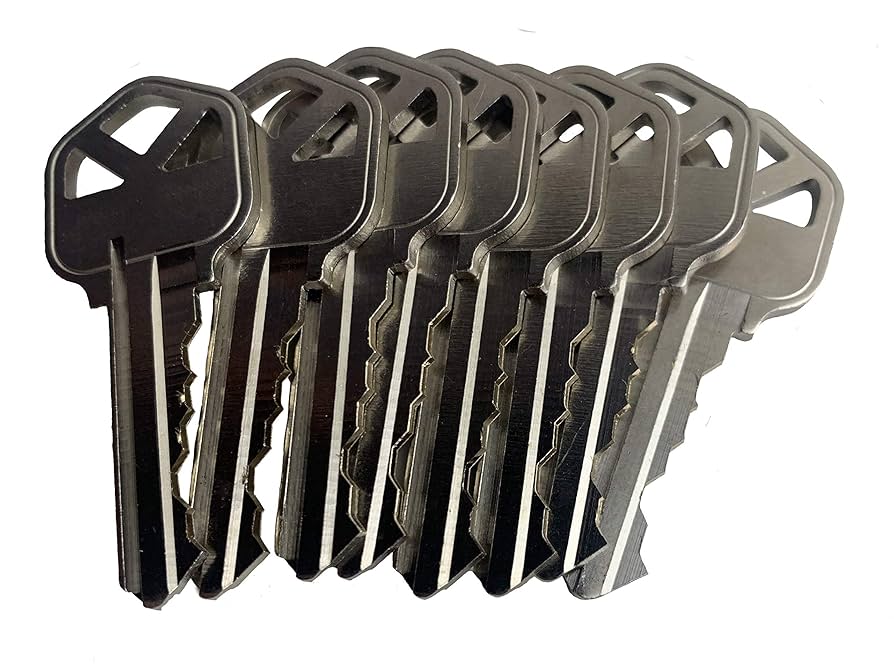
Losing a key is more than just an inconvenience
It might happen in a mall, at the beach, or on a desert trip — suddenly, your house key is missing. You retrace your steps, but it’s gone. Now the real question is:
Is your home still secure? And what should you do next — rekey or replace the lock?
Let’s break down the difference and what makes the most sense for Dubai homes.
What’s the Difference Between Rekeying and Replacing a Lock?
Rekeying
- Changes the internal pins inside the existing lock
- Makes old keys useless
- You get a new set of keys, but keep the same hardware
Pros:
- Cheaper than full replacement
- Fast process (takes 15–30 minutes per lock)
- No visible change to the door
When is rekeying enough?
- You lost your key but don’t think it was stolen
- The lock itself is still in good condition
- You just moved in and don’t want unknown old keys to work
🔁 Replacing
- You remove the entire lock and install a new one
- Can upgrade to a stronger or smarter lock
- Ideal for worn-out, broken, or low-security locks
Pros:
- Better long-term security
- Chance to switch to digital or high-security model
- Removes any mechanical wear
When should you replace?
- The key was stolen or your bag was snatched
- You suspect someone may know where you live
- The lock is cheap, loose, or outdated
- You want a digital lock upgrade or keyless entry
What Dubai Residents Need to Consider
- Are you a tenant?
You’ll need landlord approval to replace the lock — but rekeying is often allowed if:- You lost your key
- You agree to restore the original key setup later
- Is your building part of a master key system?
Some apartment complexes (especially older ones) use one master key for all units. In this case, rekeying might not be allowed — and you’ll need to work with building management. - Do you use a smart lock?
You may not need to do either — simply disable the lost code or access card. If it’s a physical override key that’s lost, check if it’s possible to reset the lock’s mechanical core.
Don’t Wait Too Long
Even if you think your key was just “dropped” and won’t be used by anyone — that’s a risk you don’t want to live with.
In Dubai, unauthorized home entry — even without theft — can be a criminal offense, and failing to secure your home may affect insurance coverage.
How Much Does It Cost?
- Rekeying (standard cylinder): AED 100–250 per door
- Lock replacement (mechanical): AED 150–400 depending on brand
- Digital lock replacement: AED 500–2,000 depending on model and features
Key Takeaway
If you’ve lost a key in Dubai, don’t ignore it. Rekeying is fast, discreet, and affordable — perfect for renters. But if your lock is outdated or you’re ready for an upgrade, full replacement gives peace of mind and better protection.
13. What Dubai Residents Should Know About Master Key Systems in Apartments
One key to rule them all — but should it?
If you live in an apartment complex in Dubai — especially in older buildings or high-density clusters like Deira, Karama, or International City — chances are your flat is part of a master key system.
While convenient for landlords and building management, many residents don’t realize the security risks and limits of these systems.
Let’s clear the air.
What is a Master Key System?
It’s a locking system designed so that:
- Each tenant has a unique key that opens only their apartment
- A master key can open multiple units or all doors in the building
These systems are commonly used by:
- Landlords or real estate managers
- Facility and building maintenance teams
- Hotel-style serviced apartments
Pros and Cons for Tenants
Benefits:
- Fast access during emergencies (e.g. water leak, fire, or lockout)
- Maintenance staff can access units without needing spare keys
- Landlords don’t have to track 100+ different keys
Risks and Drawbacks:
- Multiple people may have master key access — including cleaners, guards, maintenance workers, or contractors
- If the master key is lost, every unit is at risk
- You can’t easily rekey or change your lock — it may disrupt the whole system
- Tenants are often not told that a master key exists
Can You Opt Out or Change Your Lock?
Here’s where it gets tricky.
Most Dubai tenancy contracts do not grant tenants permission to change a lock that’s part of a master key system unless:
- The landlord gives written approval
- The new lock can still function with the master key (special hardware required)
In some buildings, changing the lock without consent could violate:
- Tenancy laws
- Building security protocols
- Your right to emergency services (if your flat becomes inaccessible to management)
Tip: If you’re worried about privacy or security, request a “non-master keyed” cylinder from your landlord. Some buildings allow it on a case-by-case basis.
How to Know If You’re Part of a Master Key System
- Ask the building security or property manager directly
- Check your lock — many master-keyed locks are stamped with a code or property ID
- If your neighbor’s key fits your lock (but doesn’t open it), that’s a strong sign
Safer Alternatives (If Allowed)
If your building restricts lock changes:
- Ask to install a secondary lock inside (e.g., a latch or chain lock)
- Use a digital smart lock overlay that doesn’t interfere with the main lock
- Discuss partial access removal with management (some systems allow restricting master access to certain units)
Key Takeaway
Master key systems in Dubai are legal and common, but they come with security compromises. As a tenant, you have limited control — but you can still ask questions, set boundaries, and request safer options when needed.
14. What to Do If Your Apartment Key Breaks Inside the Lock in Dubai
One snap — and you’re stuck outside
It often happens without warning: you’re turning the key to open your front door, and suddenly, snap! Half the key is in your hand, the other half is stuck inside the lock.
This issue is surprisingly common in Dubai, especially in:
- Older apartment blocks with worn-out locks
- Low-cost cylinder locks installed in budget flats
- Flats where keys are duplicated from old, worn-down copies
Let’s walk through what you should do step-by-step, and how to avoid making the problem worse.
First: Don’t Try to Force the Key Out
Your first instinct may be to jiggle or force the broken piece out with pliers or a screwdriver.
Don’t.
This could:
- Push the broken piece deeper
- Damage the lock mechanism
- Turn a simple fix into a lock replacement job
Take a deep breath and follow this safe action plan.
Step-by-Step: What You Can Do
1. Assess how much of the key is visible
- If part of the broken key is sticking out, you may be able to grip it with:
- Tweezers
- Fine-tipped pliers
- A metal paperclip bent into a hook
Gently pull it out — do not twist or rotate.
2. Lubricate the lock (if safe to do so)
- Use lock lubricant spray (like WD-40) if available
- Don’t use cooking oil or soap — they can gum up the lock
Spray lightly into the keyhole to loosen the broken part.
3. Use a key extractor (if you have one)
- These thin tools are designed to hook the inside edge of the broken key
- They can be found in lock repair kits — or used by professional locksmiths
Important: If the key broke while unlocking from the outside, and you don’t have tools, do not continue trying. You risk damaging the pins inside.
If You’re Locked Out (and Can’t Get the Key Out)
You have two options:
- Call Building Maintenance or Security
- Some buildings in Dubai have emergency access services
- They may have a spare key or master key
- Call a Licensed Locksmith
- They’ll use extraction tools or, if needed, remove the cylinder entirely
- Most professionals can resolve this without damaging your door
If it’s a digital lock and the mechanical override key breaks — a technician will need to open the battery housing or emergency power port to gain entry.
What Causes Keys to Break Inside Locks?
- Worn-out keys
Keys that are bent, cracked, or duplicated too many times are more likely to snap. - Dry or corroded lock cylinders
Dust and sand can build up over time, especially in outdoor flats. - Misalignment
If the door is slightly sagging or misaligned, the key may catch or get stuck when turned. - Low-quality lock materials
Cheaper locks tend to seize up more and have brittle keys.
Prevention Tips
- Lubricate locks every 6–12 months (especially in sandy or humid areas like Dubai Marina or JVC)
- Replace old or copied keys before they wear out
- Avoid putting pressure on the key if it feels stuck
- Use two hands when locking/unlocking if the door is tight
Key Takeaway
A broken key doesn’t have to ruin your day — but how you handle it in the first 5 minutes can make a big difference. Avoid force, know when to stop, and get expert help when needed. And always carry a backup key if possible.
15. Why You Should Regularly Lubricate Your Apartment Lock in Dubai
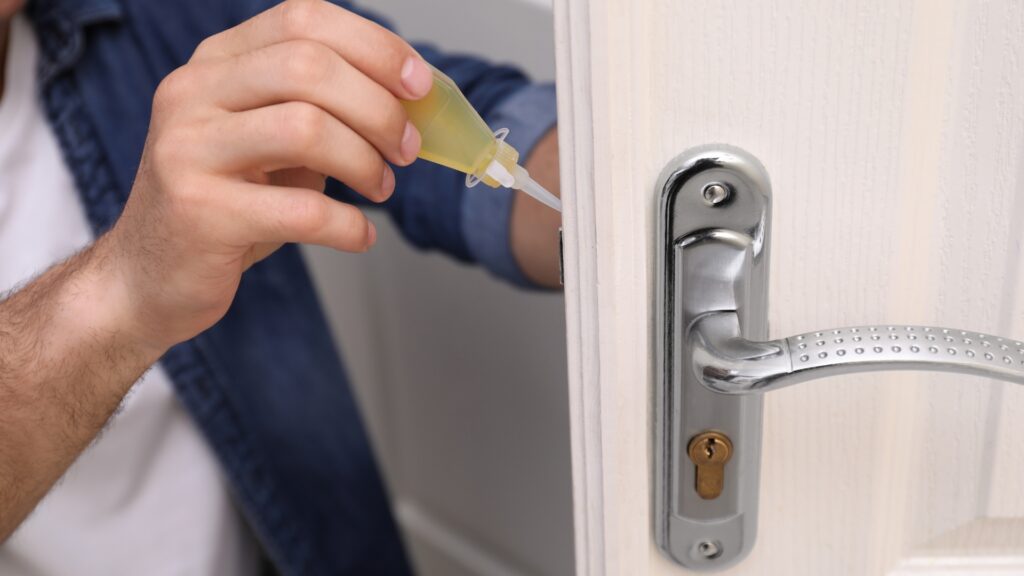
A few seconds of care can save you hundreds of dirhams
Locks are one of the most used — but least maintained — parts of any home. You unlock and lock your apartment door every day, sometimes with force, sometimes in a rush. Over time, Dubai’s climate, dust, and usage patterns wear down the internal mechanism.
If you’ve ever had to struggle with a sticky lock, a jammed cylinder, or even a broken key, there’s a good chance it was due to lack of lubrication.
Let’s break down why this matters — and how to do it right.
Dubai Weather and Lock Damage Go Hand in Hand
Living in Dubai means dealing with:
- Sand particles carried by wind
- Humidity from coastal areas like Dubai Marina or Jumeirah
- Heat expansion of metal components during peak summer months
All of these factors can cause your door lock to:
- Feel stiff when turning
- Get jammed during opening or locking
- Start grinding or squeaking
- Stop recognizing digital key inserts smoothly (in hybrid locks)
Lubrication prevents these issues — and extends the life of your lock.
What Happens Inside an Unlubricated Lock?
- The pins and tumblers become dry
- Dust settles inside and clumps with moisture
- Metal parts scrape each other, wearing down precision
- Over time, the lock becomes tight, and keys can snap or bend
It’s like running an engine without oil — eventually, something will break.
What Kind of Lubricant Should You Use?
Use:
- Dry graphite lubricant (best for pin tumbler locks)
- Teflon-based spray lubricants
- WD-40 Specialist Lock Lubricant (not regular WD-40, which can attract dust)
Avoid:
- Cooking oils
- Petroleum jelly
- Soap or dishwashing liquid
- Grease — it traps sand and causes faster wear
How to Lubricate Your Lock (Step-by-Step)
- Clean the keyhole using a cotton swab or compressed air (optional but helpful)
- Insert the spray straw of the lubricant into the keyway
- Apply a short burst of spray (1–2 seconds)
- Insert your key and turn it a few times to distribute the lubricant
- Wipe off any excess residue from the key or door handle
This process takes less than 60 seconds, but can keep your lock working smoothly for months.
How Often Should You Lubricate?
- Every 6 months (standard)
- Every 3–4 months if you live near the sea or in dusty areas like Al Qusais, JVC, or DIP
- Immediately after a dust storm or heavy rain
For digital locks, always follow the manufacturer’s guide for maintenance — never spray directly into electronic components.
Benefits of Regular Lock Lubrication
- Prevents lockouts due to jammed mechanisms
- Reduces wear on your key
- Extends the life of both mechanical and smart locks
- Makes daily usage smoother and quieter
- Minimizes the risk of sudden breakage — especially during emergencies
Key Takeaway
Think of lock lubrication as basic hygiene for your home. It costs almost nothing, takes just a minute, and protects your locks from the unique weather conditions of Dubai. Like changing your AC filter, it’s a small task that can prevent big headaches later.
16. Why It’s Dangerous to Leave Your Key Inside the Lock Overnight
“It’s just convenient.”
Many Dubai residents, especially those living alone, have a habit of locking the door from the inside — and leaving the key in the keyhole overnight.
While it might feel safer, this can actually make your home more vulnerable, not more secure.
Let’s explore the real risks behind this simple habit.
The 3 Major Risks of Leaving Your Key Inside the Lock
1. You May Get Locked Out From the Outside
Many locks in Dubai, especially those in older buildings or mid-range apartments, use double-cylinder locks. When the key is left inside:
- A key inserted from the outside won’t turn
- Even a duplicate key or master key won’t work
- You’ll be locked out — even if help arrives
This becomes a serious problem during emergencies.
Imagine:
- A fire or water leak breaks out and your neighbor or building guard tries to enter
- A family member tries to access your flat while you’re unresponsive
- You rush out and forget your phone and key — now you’re locked out entirely
2. It Can Damage the Lock Mechanism Over Time
Locks are designed to handle key pressure from one side at a time. Leaving a key inside:
- Puts continuous tension on the internal springs and pins
- Increases metal fatigue of the core
- May cause key misalignment over time, especially with poor-quality cylinders
Result: The lock becomes stiffer, keys break more easily, and the lock may fail without warning.
3. Burglars Know This Trick — And Use It
Some professional thieves (yes, even in gated communities) know how to:
- Use magnets or special tools to rotate or extract keys from outside
- Use “bumping” or “hook” techniques to manipulate locks that already have a key inside
This practice, known in locksmithing as “key trapping”, can help burglars disable the lock from outside if they know someone left a key in.
But Isn’t It Safer to Lock from Inside?
Yes — locking your door is essential. But instead of leaving the key inside:
Use a deadbolt or latch on the inside that doesn’t rely on a key
Consider installing a turn-style thumb knob on the inner side of the cylinder
Switch to a smart lock with an auto-lock feature and no physical key dependency
Emergency Situations: Think Ahead
In emergencies, responders or neighbors cannot help you if:
- The door is locked
- The key is inside
- You’re unconscious or can’t respond
This isn’t about paranoia — it’s about preparedness. Dubai’s high-rise lifestyle means neighbors and building staff are often your first responders. Make access possible when it counts.
Key Takeaway
Leaving your key inside the lock overnight feels safe — but it creates real risks. From damaging your lock to blocking emergency access or aiding burglars, this habit is better replaced with smarter, safer locking solutions.
17. Apartment Key Management Tips for Families Living in Dubai
More people = more keys = more chances something goes wrong
If you live in Dubai with your spouse, kids, parents, or even house help, managing keys can quickly become a daily headache. Lost keys, duplicate confusion, unauthorized use — and let’s not forget the panic when a child gets locked inside.
That’s why key management isn’t just about organization — it’s about safety, routine, and planning.
Here’s how to do it smartly.
1. Keep a Key Log (Yes, Even for Families)
Many Dubai residents give keys to:
- Spouse or partner
- Children
- Nanny or maid
- Visiting relatives
- Neighbors (for emergencies)
Create a simple note (physical or digital) that includes:
- Who has which key
- When it was given
- If it’s a master or sub-key
- Where the spare keys are kept
If you ever need to rekey, you’ll know exactly how many copies exist.
2. Teach Kids the Basics (Starting at Age 7–8)
Children should be taught:
- How to safely lock and unlock the door
- Never to force the key
- To never give their key to anyone outside the family
- What to do if they lose the key or get locked out
Pro tip: Attach a brightly colored tag or smart Bluetooth tracker to your child’s keychain so it’s easier to find.
3. Plan Ahead for Domestic Staff or House Help
For live-in help or part-time maids:
- Use limited-access keys or install a secondary lock that only you control
- Collect keys at the end of the day if they don’t live in
- Never allow key duplication without your consent
- Always change or rekey locks when a staff member leaves
4. Designate a Hidden Spare Key — But Smartly
Do not hide a spare under the doormat or in the shoe rack (common practice in many Dubai flats).
Instead:
- Use a mini key safe box attached to your apartment grill or meter cabinet
- Share the code with only trusted adults
- Change the code every few months
This way, if someone is locked out, they don’t need to break the door.
5. Consider Going Keyless
If your family constantly juggles keys:
- Consider a smart lock with fingerprint or code access
- Many allow multiple profiles for parents, kids, guests, and helpers
- You can change codes anytime without replacing the lock
This is especially helpful for working parents with school-going kids.
6. Set Weekly Routines
Every Friday (or weekend day):
- Check where all keys are
- Test spare keys
- Lubricate the main door lock every few months
- Remind the family about basic key safety
A routine reduces stress when something goes wrong — because it will, eventually.
Bonus: When a Key Goes Missing…
If a key goes missing:
- Don’t wait — retrace the steps immediately
- If the area where it was lost is public (like a mall or taxi), rekey the lock immediately
- Don’t assume a key with no tag is safe — someone could trace it back via ID, mail, or apartment number
Key Takeaway
In busy Dubai households, key safety is family safety. The more people who have keys, the more structured your approach needs to be. A bit of planning today avoids stress, cost, and risk tomorrow.
18. The Truth About Duplicate Keys in Dubai — Are All Copies the Same?
“It’s just a copy, what could go wrong?”
In Dubai, it’s common to make duplicate keys — for housemaids, office staff, roommates, or just as a backup. But here’s the catch: not all duplicates are made equal, and a poorly cut key can quietly cause months of frustration.
Let’s explore what you need to know before handing over your spare key or getting one made in a shop.
Key Duplication in Dubai: How It Works
You’ll find key duplication shops in:
- Hardware stores (Dragon Mart, Deira, Satwa)
- Mall kiosks
- Specialized locksmith outlets
- Some mobile locksmith vans
Most of these shops use manual or semi-automatic key cutting machines, which trace your original key to cut a new one.
But this system relies heavily on:
- The skill of the technician
- The condition of your original key
- The quality of the blank key material
Common Problems with Poor Key Copies
- Slight mismatch in the grooves
Result: The key jams, doesn’t turn smoothly, or wears out your lock - Soft or low-grade metal
Cheap duplicate keys are made from low-density alloys and break easily — especially in Dubai’s heat - Over-polished or undercut keys
A key might “look perfect” but won’t work because tiny cuts are missing or too deep - Security key duplication without authorization
Some high-security or restricted keys require permission cards or original purchase documents to be duplicated — but some shops ignore this, compromising safety
Security Risk: Can Someone Make a Copy Without You Knowing?
Yes. If someone has physical access to your key — even briefly — they can:
- Take a clear photo and recreate it using software
- Trace the shape onto a blank
- Duplicate it at certain locksmiths without any ID requirement
This is why some smart residents in Dubai use:
- Do Not Duplicate stamped keys (though not legally enforced)
- Restricted profile keys that can’t be copied without proof
- Smart locks with no physical keys at all
Best Practices for Safe Duplication
- Always duplicate from the original, not a copy of a copy
- Use reputable locksmiths, not just any key-cutting kiosk
- Test the new key at home before trusting it to someone else
- If you live in a shared space (like Silicon Oasis, JVC, or Bur Dubai), always ask: “Do I trust this person with access to my home?”
What to Do If a Duplicate Doesn’t Work Properly
- Don’t force it — it could break inside the lock
- Label it and avoid using it until tested
- Consider recutting from the original at a better facility
- If you suspect someone duplicated your key without permission, rekey your lock immediately
Key Takeaway
In Dubai, key duplication is quick and accessible — but precision and trust matter. Poor-quality copies can damage your lock, while unauthorized copies can compromise your home’s security. Always choose quality over convenience when it comes to who holds a key to your home.
19. Why Apartment Door Alignment Affects Lock Performance in Dubai
It’s not just the lock — it’s the door too
If your key feels tight when turning, or you have to yank the handle upward to lock your door, chances are the door is misaligned — and not the lock’s fault.
In Dubai, where buildings settle and temperatures fluctuate wildly between AC interiors and scorching exteriors, door alignment issues are common in both new and older properties.
Let’s break down what alignment is, how it affects your locks, and what you can do about it.
What Is Door Misalignment?
Door misalignment happens when the door and frame shift out of sync, so the latch, bolt, or lock cylinder no longer lines up perfectly with the strike plate.
This can cause:
- Difficulty inserting or turning the key
- Lock bolts that don’t fully engage
- Latches that don’t click into place
- Doors that rub or jam at the top or bottom
Why Is This So Common in Dubai?
- Building Movement
High-rise buildings (especially in areas like JLT, Dubai Marina, and Business Bay) naturally shift due to structural settling or vibration. - Heat Expansion
Dubai’s intense summer heat causes metal doors to expand, misaligning hinges and bolts — especially on external doors. - Humidity in Coastal Areas
Moisture causes wooden doors to swell, common in villas in areas like Jumeirah, Palm Jebel Ali, or Mirdif. - Poor Installation or Hinges
Many budget apartments have doors installed in a rush. Hinges sag with time, especially if low-quality screws or materials were used.
What Happens If You Ignore It?
- Broken Keys: When alignment is off, you apply more force, which bends or snaps keys
- Damaged Locks: Cylinders wear out faster when bolts don’t slide smoothly
- Jammed Doors: You might get locked in or out when the bolt fails to engage or retract
- Increased Costs: You may end up replacing an entire lock when real issue was just adjustment
How to Tell If Your Door Is Misaligned
- You hear a “click” sound when opening or closing the door but the latch doesn’t seat fully
- The deadbolt feels tight when locking or won’t lock unless you lift the door
- Visible gaps at the top, bottom, or hinge side of the door
- Door rubs or scratches against the frame or floor
- You have to “slam” or push hard for the door to shut
What You Can Do
Short-term fixes:
- Apply graphite lubricant to the bolt/latch to ease movement
- Gently tighten or adjust door hinges if they’re loose
- File the strike plate opening slightly if the bolt is missing its mark by a few mm
Long-term fix:
- Call building maintenance or a door technician to realign the frame and adjust hinges or screws
- In serious cases, the strike plate or entire lockset may need to be repositioned
Bonus Tip: After Installing a New Lock
Whenever you install a new lock (smart or mechanical), always:
- Check the bolt movement with the door open AND closed
- Make sure door doesn’t shift under pressure
- Test locking and unlocking without applying force
A perfectly installed lock can still fail if the door frame is misaligned.
Key Takeaway
Before blaming your lock for being faulty, check your door. In Dubai’s shifting buildings and harsh climate, door alignment issues are a silent killer of locks and keys. Fixing the frame might save you from damaging the lock entirely.
20. Dangers of Forcing a Stuck Key — And How to Avoid Breaking It
That feeling when your key won’t turn — and you twist harder…
You’re tired, it’s late, or you’re in a rush — and suddenly your front door key won’t budge. In frustration, you twist harder, trying to make it work.
Big mistake.
Forcing a stuck key is one of the fastest ways to break it inside the lock — and a top reason for emergency locksmith calls in Dubai. In many cases, the damage is completely avoidable.
Here’s what’s happening behind that stiff key — and what you should (and shouldn’t) do.
Why a Key Gets Stuck in the First Place
- Misaligned door frame (see Section 19)
- Lack of lubrication in the lock
- Dust and sand buildup inside the keyway (common after sandstorms)
- Worn or bent key, especially if it’s an old duplicate
- Lock cylinder wear, especially in older buildings with heavy usage
- Using the wrong key (it happens more than you’d think, especially with similar-looking ones)
What Happens When You Force It
- Key bends slightly — even if you don’t notice
- It snaps inside the cylinder under pressure
- Broken piece gets jammed deep inside, blocking all further entry
- Attempting to remove it with tweezers or random tools damages the lock pins
- You now need a full lock replacement, not just a key
Average cost to fix a broken key inside a lock in Dubai: AED 250–600
Cost to prevent this with a spray of graphite: Under AED 20
What to Do When a Key Feels Stuck
Stop and examine
- Don’t twist further — pull it out and check for dust, bends, or cracks.
Try another copy
- If you have a spare key, test it. If the spare works, your original may be worn or damaged.
Lubricate carefully
- Use a dry lock lubricant (not oil-based) and spray a short burst into the keyhole. Insert and gently jiggle the key.
Check the door alignment
- Does the lock turn freely when the door is open but gets stuck when it’s closed? That means alignment is the problem — not the lock.
What You Should NEVER Do
- Never force the key with pliers or extra pressure
- Don’t pour water, soap, or cooking oil into the lock — it’ll trap dust
- Avoid sticking paperclips, tweezers, or knives into the lock
- Don’t keep retrying a key that’s already bent or cracked — it’s a ticking time bomb
If the Key Breaks Anyway…
If the key snaps off inside:
- Don’t keep trying to pull it out without the right tools
- If part of the key is visible, gently use needle-nose pliers to pull it straight (not twisted)
- If it’s completely inside or stuck at an angle, call a professional — trying to force it out can break the lock pins permanently
Key Takeaway
A stuck key is your lock asking for help — not a challenge to wrestle with. In Dubai’s dusty, hot, high-use environment, stiffness is common. A few seconds of care is better than hours of regret (and a high repair bill).
Final Thoughts: It’s Not Just About Locks — It’s About Living Smarter in Dubai
We lock our doors without thinking. We hand over keys without a second thought. But as you’ve now seen, the small, everyday things — a worn key, a stuck bolt, a door that doesn’t quite align — are often where the biggest risks quietly live.
This guide wasn’t written to scare you.
It’s here to equip you. To make you feel more in control of the place you call home. Because whether you live in a high-rise in Downtown, a villa in Mirdif, or a flat in International City, you deserve to feel safe and prepared, without needing to be an expert.
From understanding door alignment to spotting key duplication risks, from keeping your family’s key routine organized to knowing what not to do when a key sticks, it’s all about awareness over anxiety.
You don’t have to fix everything today. But now you know where to start.
And when you’re ready, or if things go sideways, know that help exists — quietly, reliably, without pressure — right here in Dubai.
Thanks for reading.